A major new development could soon reshape part of downtown Naperville while putting the city on the national map for sustainable urban living.
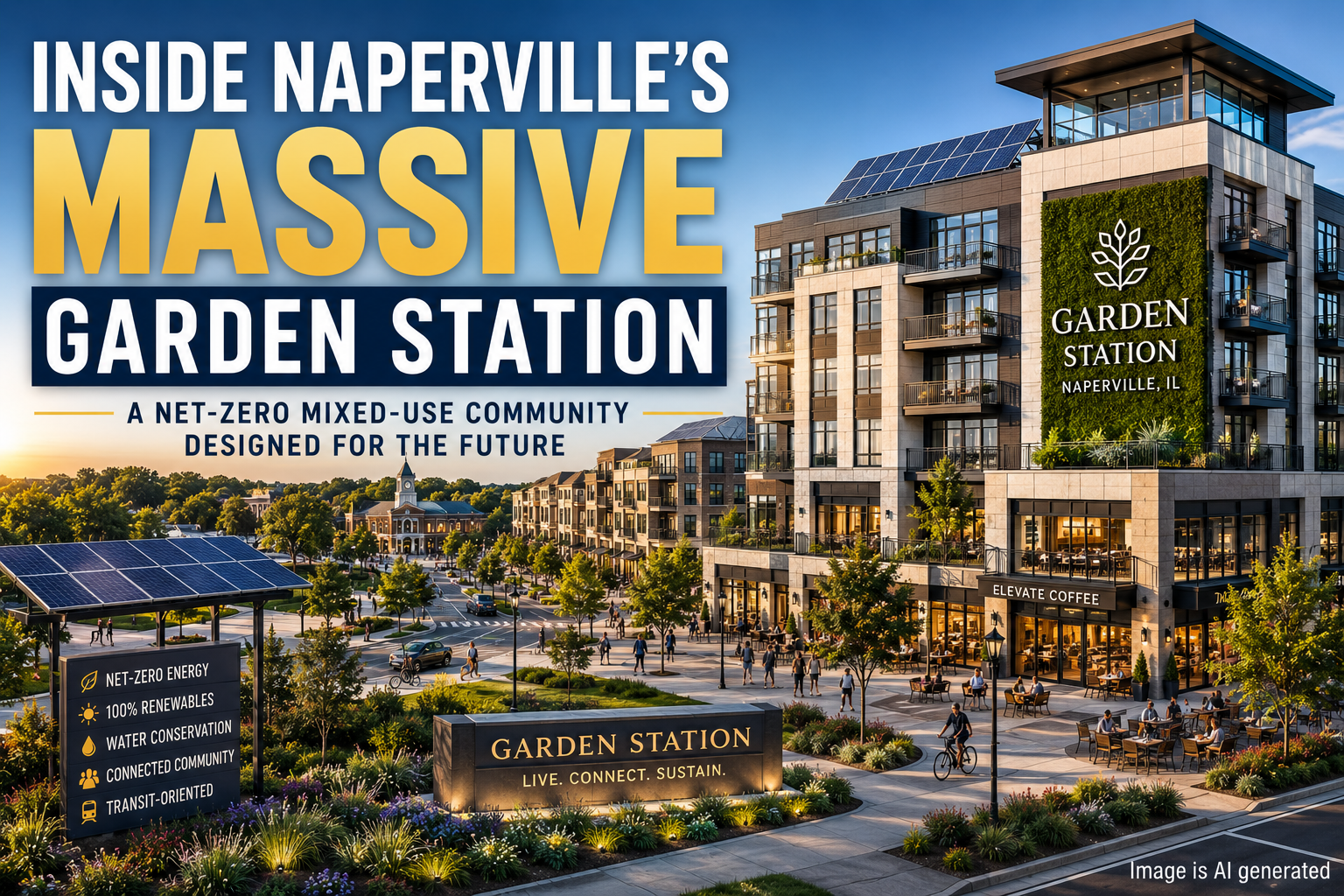
Known as Garden Station, the proposed mixed-use community recently received key local approvals and is being described as what could become the largest net-zero mixed-use development in the United States.
If completed as planned, the project would introduce hundreds of new residential units, retail space, public gathering areas, and innovative sustainability features just steps from downtown Naperville and the Metra station.
What Is Garden Station?
Garden Station is a proposed mixed-use development that would bring approximately 348 luxury residential units along with retail, restaurant, and community space to a prime transit-oriented location near downtown Naperville.
The development is designed around the principles of walkability, sustainability, and reduced environmental impact.
Its location near the Naperville Metra station makes it an ideal example of Transit-Oriented Development (TOD), encouraging residents to live, work, and travel with less dependence on automobiles.
Why This Project Is Getting National Attention
What makes Garden Station unique isn't simply its size.
Developers intend for the project to operate as a net-zero community, meaning it would generate as much energy as it consumes over time.
Planned sustainability initiatives include:
Highly energy-efficient building systems
Advanced water conservation measures
Renewable energy integration
Reduced carbon emissions
Walkable community design
Green building technologies and materials
If these goals are achieved, Garden Station could become one of the most ambitious sustainable residential developments in the country.
Why It Matters for Naperville
Naperville has long been recognized as one of the most desirable suburbs in America, thanks to its highly rated schools, thriving downtown, strong job market, and exceptional quality of life.
Garden Station represents another step in the city's continued evolution.
The project could:
Add additional housing options near downtown
Increase economic activity for local businesses
Encourage walkability and transit usage
Attract residents seeking urban-style living in the suburbs
Further strengthen Naperville's reputation as an innovative community
The development may also help meet growing demand for housing in one of the region's most competitive real estate markets.
A Growing Trend Across the Country
Communities throughout the United States are increasingly embracing mixed-use developments that combine housing, restaurants, retail, public spaces, and transit access into a single neighborhood.
These projects appeal to residents who want:
Less commuting
More walkability
Easier access to amenities
Environmentally conscious living
A stronger sense of community
Garden Station reflects many of these national trends while potentially taking sustainability efforts even further.
What Happens Next?
While Garden Station has already secured important local approvals, additional planning and development work remains before construction fully moves forward.
If completed as envisioned, the project could become one of the most significant developments in Naperville in decades.
It may also serve as a model for future mixed-use communities throughout the Chicago region.
Final Thoughts
Naperville continues to evolve while maintaining many of the qualities that have made it one of the most desirable places to live in Illinois.
Garden Station represents an ambitious vision for the future — one that blends housing, sustainability, transit access, and community-focused design.
If successful, the development could become far more than another residential project.
It could position Naperville as a national leader in sustainable suburban development and create one of the country's most innovative mixed-use communities.
Check out this article next