7 Chicago Suburbs That Don't Feel Like Suburbs
You really do not have to choose between city energy and suburban space anymore.
Some Chicago suburbs have figured out a balance that a lot of places are still chasing. They have real downtowns, real walkability, strong train access, local restaurants that stay busy, and enough day-to-day convenience that life does not feel like a constant cycle of driving from one parking lot to another.
That is what this list is about.
These are seven Chicago suburbs that feel more connected, more active, and more complete than the typical suburban setup. Some lean heavily on transit. Some have downtowns that function like mini city centers. Some bring luxury, some bring value, and one in particular feels like one of the most underrated opportunities in the entire metro right now.
If you are moving to the Chicago suburbs, downsizing from the city, or just trying to find a place where you can still walk to dinner without giving up space and schools, these are the places worth paying attention to.
What Makes a Suburb Not Feel Like a Suburb?
Before getting into the list, it helps to define what separates these towns from the standard suburban formula.
Most suburbs are built around cars first. You get subdivisions, big roads, shopping centers set back behind parking lots, and maybe a train station added somewhere later. The places on this list work differently. In many cases, they grew around a rail line and a true downtown core long before modern suburban sprawl became the norm.
That older pattern still matters today.
It creates:
- Walkable downtown districts with shops, restaurants, and entertainment close together
- Better train access for commuters heading into Chicago
- Stronger community identity because the town has an actual center
- Everyday convenience that does not depend entirely on driving
- Long-term appeal because these places tend to hold attention and value
That is the through line here. Different price points, different personalities, same idea: these suburbs feel lived-in and connected in a way that stands out.
1. La Grange
La Grange is one of the clearest examples of what happens when a town grows naturally around transit instead of trying to manufacture a downtown after the fact.
The BNSF Metra line is the backbone here, and the La Grange Road station puts Chicago Union Station about 30 minutes away. That is a very manageable commute, especially for anyone who wants city access without city density.
What makes La Grange special is that the downtown does not feel forced. It feels like it has always been the center of town, because it has. That gives the whole area a kind of energy that newer suburban developments usually cannot fake.
Downtown La Grange has a strong mix of local businesses, restaurants, rooftop spots, and places that are active even on an ordinary weekday. It is not just a pretty main street that comes alive for special events. There is actual momentum here. Community programming helps too, with events like Restaurant Week keeping people engaged throughout the year.
On the pricing side, the core La Grange market was sitting in the low $900,000s in early 2026. That is not entry-level by any means. But for buyers who like the setup and want a slightly more approachable number, La Grange Highlands offers a nearby alternative, generally in the low to mid $700,000s.
One important note: this is a fast-moving market. Homes are not sitting around, and strong listings often move near or above asking price.
Why it stands out: true downtown, fast train commute, established village feel, and serious day-to-day walkability.
2. Naperville
Naperville does not really behave like a suburb in the way most people expect. It feels more like a small city inside the Chicago metro.
The scale is a big part of that. Downtown Naperville is extensive, active, and packed with things to do. The Riverwalk ties a lot of it together, running along the DuPage River and linking residential areas directly into the retail and dining core. That matters because it creates a lifestyle where you can leave home and actually walk into town for dinner, coffee, or shopping without needing to plan the whole trip around your car.
The downtown business mix is deep too. In 2026, the downtown directory listed more than 150 stores, restaurants, and service businesses. That gives the area a full, layered feel. You have coffee shops, boutiques, family restaurants, spas, and wine bars all in a layout that still feels walkable rather than overwhelming.
Commuting is solid as well. The Naperville Metra station offers express service to Union Station in roughly 40 to 45 minutes. For many people, that compares surprisingly well with travel times from some neighborhoods inside Chicago once traffic, parking, and local transit are factored in.
Naperville also catches people off guard on price. Median sales prices were sitting in the high $500,000s in early 2026. Considering the amount of space, lot size, and school access available here, that number lands differently than many buyers expect. The effective property tax rate sits just above 2%, and Naperville Community Unit School District 203 carries an A+ rating from Niche.
If you want a suburb where the systems are mature, the infrastructure is built out, and the lifestyle options are broad, Naperville is the benchmark for a reason.
Why it stands out: scale, walkability, strong schools, and a downtown that feels closer to an actual city center than a typical suburban main street.
3. Elmhurst
Elmhurst has a different kind of downtown energy, and a lot of that comes from having a university woven right into the middle of it.
Elmhurst University changes the feel of the city center in a meaningful way. It keeps people in the area throughout the week and helps downtown feel active beyond the usual dinner rush or weekend peak. There is movement, there is foot traffic, and the whole place feels used rather than staged.
The food scene has matured here too. You can find higher-end dining alongside more casual neighborhood staples, which gives the downtown some range. Spots like 100 South Chop House bring a polished edge, while places such as Beer on the Wall add a more relaxed, hangout-style atmosphere. That mix is a big part of why Elmhurst works. It is not one-note.
Community programming also plays a role. Events like the Umbrella Sky project give the downtown a creative, intentional identity. It feels like the kind of public activation many city neighborhoods aim for, which is not something you can say about every suburb 20 miles outside Chicago.
For families, Elmhurst Community Unit School District 205 reports a graduation rate around 95%, which is a meaningful data point if schools are part of your decision.
In early 2026, downtown Elmhurst pricing was in the low $600,000s, while the broader city pushed into the mid to high $600,000s. That split matters. It means buyers may find an entry point into Elmhurst that is more realistic than the city’s reputation suggests.
Why it stands out: university-driven energy, improving restaurant scene, strong schools, and a downtown that feels active even outside peak hours.
4. Downers Grove
Downers Grove earns its place on this list for one reason above all: accessibility.
Having three Metra stations changes everything. It makes the town more flexible, more connected, and more convenient in a way that most western suburbs simply cannot match.
The heart of downtown near Main and Curtiss feels dense, walkable, and genuinely local. This is not a downtown full of interchangeable chains. The businesses give the area a real identity, and landmarks like the Tivoli Theatre add character you do not often get in suburban commercial districts.
The restaurant and bar scene has reach too. Places like Cadence Kitchen and Foxtail are not just neighborhood favorites. They draw people in from outside town, which helps keep the area lively and relevant. Events and programming from the downtown management organization reinforce that momentum throughout the year.
Commuting is one of the biggest advantages here. The Main Street station is right in downtown, so stepping off the train and heading straight to dinner is completely realistic. Express trains into Union Station can run around 25 to 30 minutes, making this one of the easier commutes on the list.
What makes Downers Grove especially interesting is the pricing relative to everything it offers. Median sales prices were in the low $500,000s in early 2026, with homes often going pending in roughly 15 days or less. For an established downtown, strong transit setup, and this level of livability, that number suggests there may still be room for buyers who want value in a highly functional suburb.
Why it stands out: three train stations, one of the best commute setups in the western suburbs, and a downtown that actually feels like a downtown.
5. Hinsdale
Hinsdale plays a very different game.
This is the suburb on the list that leans fully into polish, prestige, and a more elevated village experience. Drive through Hinsdale and it immediately feels distinct. The homes are striking, the streetscape is refined, and the retail mix feels more curated than casual.
The walkable core around Washington Street and First Street carries that higher-end atmosphere all the way through. Boutiques and specialty shopping give the area a feel that is closer to some of Chicago’s trendier neighborhoods than what many people expect from a suburb this far out.
The real estate matches that image. In early 2026, median sales prices sat in the mid to high $900,000s, and it was common to see homes well over $1.5 million. Even at that level, properties were still selling in around 40 days or less, which speaks to ongoing demand.
Property taxes were around 1.72%, and that can become a meaningful factor for buyers coming from high-cost city neighborhoods. When you compare annual carrying costs over time, that tax structure can make the move more compelling than it first appears.
Hinsdale is not trying to be the affordable option, and it is not trying to appeal to everyone. What it offers is a highly dialed-in version of suburban living: walkable, attractive, established, and consistently desirable.
Why it stands out: luxury housing, polished downtown, strong long-term appeal, and a village atmosphere that feels especially refined.
6. Arlington Heights
Arlington Heights may be one of the best examples of a suburb that gets overlooked simply because so much attention goes west.
A lot of Chicago suburb conversations revolve around the BNSF or UP West lines. Arlington Heights sits on the Union Pacific Northwest line, and because of that, it does not always get the same spotlight. That is exactly why it deserves more attention.
Downtown Arlington Heights has real energy, especially through Arlington Alfresco, the pedestrian dining setup that runs from May through September. With more than a dozen food and drink spots spilling into an open-air streetscape, the downtown takes on the kind of outdoor atmosphere that many urban neighborhoods try hard to create.
And it is not just a warm-weather story. The Metropolis Performing Arts Centre keeps activity flowing year-round, giving the downtown an anchor that matters even when outdoor dining is not in season.
On the education side, Township High School District 214 holds an A+ rating from Niche, which is a major draw for many buyers.
Then there is the price point, and this is where Arlington Heights becomes hard to ignore. In early 2026, median sales prices were in the mid to high $400,000s. Compare that with places like La Grange, Hinsdale, or even Naperville, and the value becomes pretty clear. You are getting walkability, arts and culture, a strong school district, and an approachable entry point all in one place.
For buyers who keep stretching their budget to make a western suburb work, Arlington Heights is the place that can reset the conversation.
Why it stands out: strong schools, seasonal downtown vibrancy, year-round cultural anchor, and one of the most approachable price points on the list.
7. Wheaton
Wheaton is the underdog here, and honestly, that is what makes it so interesting.
It does not have the broad name recognition of Naperville or the luxury branding of Hinsdale. What it does have is momentum, and in a real estate market, that matters.
Downtown Wheaton centers around Hale Street, where restaurants like Altiro, Fusion, and Burger Social help create a district that feels active beyond just lunch and dinner. Live music and regular community events keep the area in use throughout the year, and that steady rhythm gives downtown a sense of authenticity. People are not just visiting it. They are living in it.
Wheaton is also tied into the Union Pacific West line, keeping it connected to the same broader transit network that serves much of DuPage County.
The numbers are what really make people pause. In early 2026, Wheaton’s median sales price was around the mid $400,000s. That alone makes it one of the more accessible towns on this list. But values had also jumped by more than 20% year over year. About half of homes were selling above asking price, and many properties were averaging around seven offers.
That is what a market in transition looks like. The downtown is getting more attention, the pricing still feels relatively approachable, and buyers are clearly noticing. Those windows tend not to stay open forever.
If there is one suburb here that feels like it could look especially different a few years from now, Wheaton is a strong candidate.
Why it stands out: strong upward momentum, active downtown, approachable price point, and the feeling that the market has not fully caught up to the lifestyle yet.
How These Chicago Suburbs Compare at a Glance
- La Grange: best for village charm and BNSF commuter convenience
- Naperville: best for scale, amenities, and family-focused infrastructure
- Elmhurst: best for downtown character shaped by a university presence
- Downers Grove: best for train access and an easy Chicago commute
- Hinsdale: best for luxury and a polished village environment
- Arlington Heights: best for value, schools, and an underrated downtown
- Wheaton: best for momentum and long-term upside at a lower entry point
What These Towns Have in Common
Even with all their differences, these suburbs share one major advantage: they were built around real places, not just residential expansion.
That might sound simple, but it is a huge deal. A train station surrounded by a functioning downtown creates a completely different living experience than a subdivision surrounded by roads and strip malls. You feel it in the rhythm of the day. You feel it in how people use the town. And you definitely feel it in the long-term demand these communities tend to hold.
That is why so many of these markets continue to move quickly. Buyers are not just paying for square footage. They are paying for convenience, identity, and a lifestyle that feels more connected.
Which Chicago Suburb Is the Best Fit?
That depends on what matters most to you.
- If your top priority is a quick train commute and classic village feel, La Grange and Downers Grove are hard to beat.
- If you want the most built-out downtown and family infrastructure, Naperville is the obvious contender.
- If you like walkability with a little more personality and cultural presence, Elmhurst deserves a close look.
- If your goal is luxury, architecture, and prestige, Hinsdale is in its own category.
- If you are trying to maximize value without giving up schools or downtown energy, Arlington Heights is a smart play.
- If you want upside and momentum, Wheaton may be the one to track most closely.
The common thread is that none of these places feel generic. Each one has a clear identity, and that is a big part of why they continue to attract attention from buyers moving around the Chicago metro.
FAQ
Which Chicago suburb feels the most like a small city?
Naperville is probably the strongest example. Its downtown scale, Riverwalk, and large concentration of restaurants and shops make it feel more like a self-contained city than a traditional suburb.
Which suburb on this list has the easiest commute to downtown Chicago?
Downers Grove and La Grange stand out for commute convenience. Downers Grove express trains can reach Union Station in roughly 25 to 30 minutes, while La Grange is around 30 minutes on the BNSF line.
What is the most affordable suburb on this list?
Wheaton and Arlington Heights had some of the lowest median sales prices in early 2026, both in the $400,000 range. Arlington Heights offers strong value with schools and downtown amenities, while Wheaton adds a strong momentum story.
Which Chicago suburb on this list is best for luxury buyers?
Hinsdale is the clear luxury choice. It combines upscale homes, a refined walkable downtown, and a highly polished overall feel that sets it apart from the rest of the list.
Which suburb is the most underrated right now?
Wheaton stands out as the under-the-radar pick. Its downtown is gaining attention, home values have been rising quickly, and the median price remains lower than many competing suburbs with similar appeal.
Are these Chicago suburbs good for people moving from the city?
Yes, especially for people who want more space without losing walkability, train access, and a sense of neighborhood identity. That is exactly what makes these towns different from more car-dependent suburban options.
Final Thoughts
The best suburbs around Chicago are not the ones that try hardest to imitate the city. They are the ones that have their own center of gravity.
That is what makes these seven places work. They have downtowns with actual purpose, train lines that still shape how people live, and enough activity that everyday life feels connected instead of spread out. Some are expensive. Some are surprisingly attainable. Some are already well known. Others still feel like opportunities hiding in plain sight.
But all of them prove the same point: suburban life does not have to mean giving up energy, walkability, or character.
Check out this article next
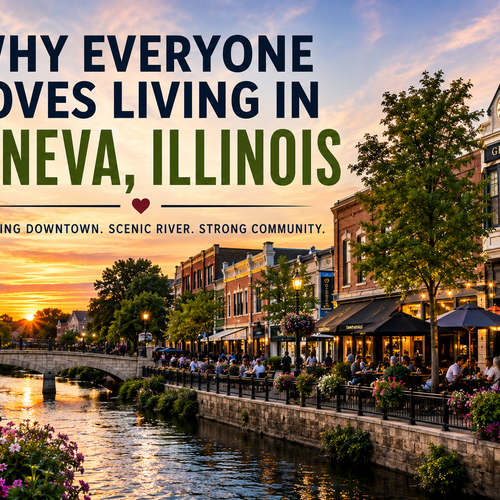
Why Everyone Loves Living in Geneva, Illinois
There’s something about Geneva that immediately feels different. Maybe it’s the charming downtown filled with boutiques and restaurants. Maybe it’s the scenic Fox River views,…
Read Article