For decades, Spring Hill Mall was a destination for shopping, dining, and community gatherings in the northwest suburbs. Families visited for weekend shopping trips, teenagers spent afternoons with friends, and local residents watched the mall evolve through multiple generations of retail.
Today, the mall is gone.
The demolition of Spring Hill Mall marks the end of an era, but it also signals the beginning of a new chapter for West Dundee. Local leaders are now working to reimagine the property, transforming one of the region's most recognizable sites into a modern mixed-use destination designed for the future.
Here's what we know about what's next for the former Spring Hill Mall property and why the redevelopment could have a major impact on the community.
A Look Back at Spring Hill Mall
When Spring Hill Mall opened in 1980, it quickly became one of the area's premier shopping destinations.
Located along the Randall Road corridor, the mall served residents from:
West Dundee
East Dundee
Carpentersville
Elgin
Algonquin
Surrounding Fox Valley communities
At its peak, the mall featured major department stores, specialty retailers, restaurants, and entertainment options that attracted visitors from across the region.
Like many shopping centers throughout the country, however, Spring Hill Mall eventually faced increasing challenges as consumer habits changed.
Why the Mall Ultimately Closed
The decline of Spring Hill Mall reflects a broader trend that has affected malls nationwide.
Several factors contributed to the property's struggles:
Growth of Online Shopping
As more consumers shifted purchases online, traditional malls saw declining foot traffic.
Changing Consumer Preferences
Many shoppers began favoring open-air lifestyle centers and mixed-use developments over enclosed shopping malls.
Retail Industry Changes
Department store closures and retail consolidation left many malls with large vacant spaces that became difficult to replace.
Competition
New shopping destinations throughout the suburbs offered different experiences that appealed to modern consumers.
Over time, vacancies increased, and redevelopment became the most viable path forward.
What Could Replace Spring Hill Mall?
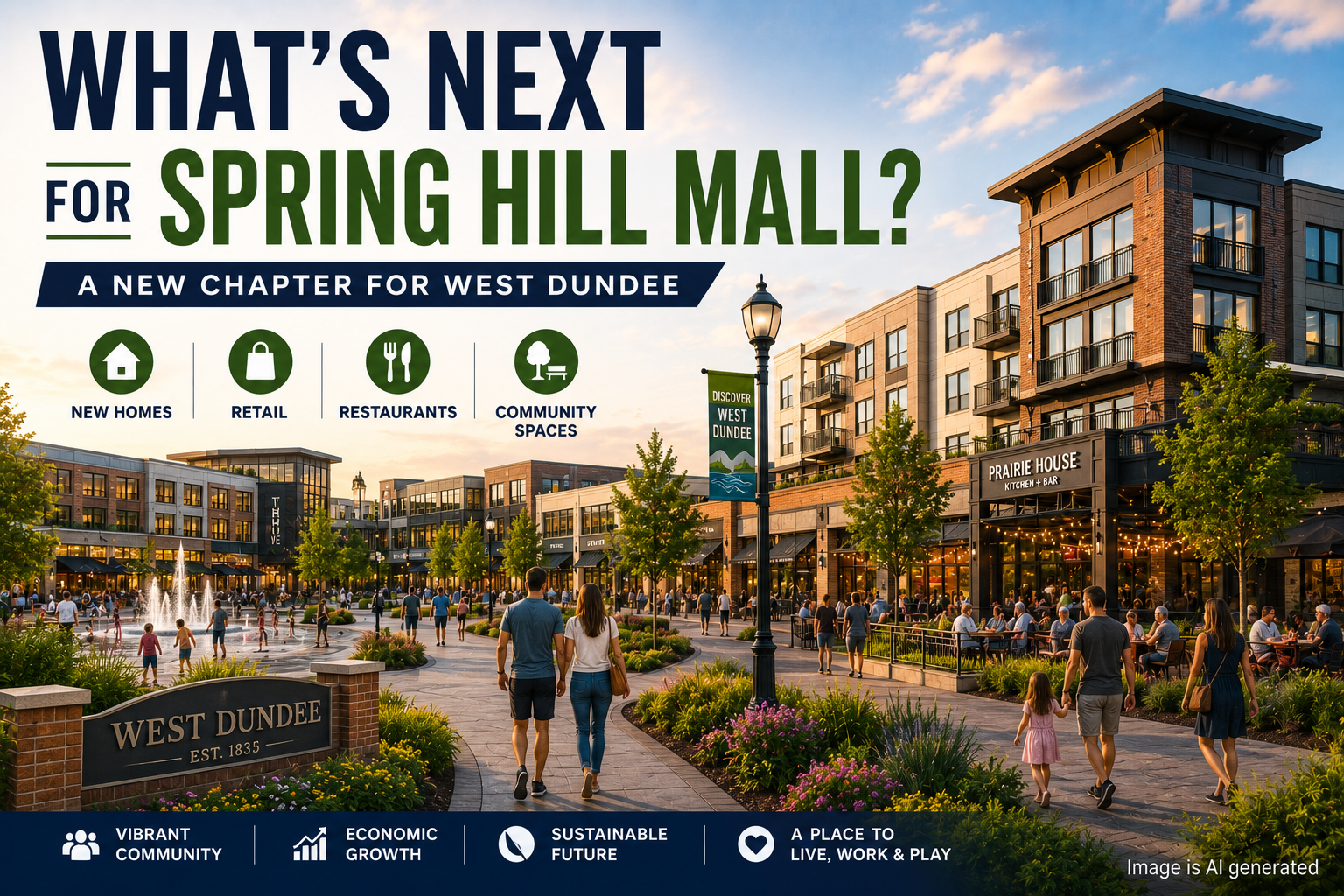
While final plans continue to evolve, local officials have made it clear that the future of the site will likely look very different from the mall that once stood there.
Preliminary concepts have included a mix of:
New Housing
Residential development could bring new residents to the area while helping meet growing housing demand.
Restaurants and Retail
Rather than a traditional enclosed mall, future plans could feature walkable shopping and dining areas designed around today's consumer preferences.
Public Spaces
Many modern mixed-use developments include gathering spaces, parks, trails, and community amenities.
Entertainment and Services
Future tenants could include fitness centers, entertainment venues, medical offices, and other uses that complement residential growth.
The goal is to create a destination that serves both residents and visitors while generating long-term economic activity.
Why This Matters for West Dundee
Redeveloping a site of this size creates opportunities that extend far beyond the property itself.
Economic Growth
New development can generate tax revenue that helps support local services and infrastructure.
Additional Housing Options
Many suburban communities are exploring ways to add housing while creating more vibrant town centers.
New Businesses
Restaurants, retailers, and service providers may be attracted to a modern mixed-use environment.
Revitalization
Transforming underutilized properties often helps strengthen surrounding commercial corridors and neighborhoods.
For West Dundee, the redevelopment represents an opportunity to reshape one of the community's most prominent locations.
The Rise of Mixed-Use Development
Projects like this are becoming increasingly common throughout the Chicago suburbs.
Rather than building separate areas for shopping, housing, and recreation, many communities are embracing mixed-use developments that combine multiple uses in one walkable environment.
Residents increasingly value:
Walkability
Dining options
Convenience
Community gathering spaces
Access to services
Developers and municipalities are responding by creating destinations that offer a more integrated lifestyle.
The future Spring Hill site could become another example of this growing trend.
What This Could Mean for Home Values
While redevelopment projects take years to complete, successful mixed-use developments often bring positive momentum to surrounding areas.
Potential benefits can include:
Increased investment
New amenities
Improved aesthetics
Additional economic activity
Greater community visibility
Of course, every project is different, and long-term outcomes depend on final plans and market conditions.
However, many communities view redevelopment of large vacant properties as an important step toward future growth.
FAQ
Is Spring Hill Mall completely gone?
Yes. The mall has been demolished, clearing the way for future redevelopment of the property.
What is planned for the site?
While plans continue to evolve, concepts have included housing, retail, restaurants, entertainment, and public gathering spaces.
When could new construction begin?
Timelines will depend on approvals, planning, and development agreements, but redevelopment discussions are actively moving forward.
Will there still be shopping on the property?
Most mixed-use concepts include some level of retail and dining, although likely in a different format than the original enclosed mall.
Why is mixed-use development becoming popular?
Many communities are shifting toward walkable environments that combine housing, shopping, dining, and recreation in one location.
Final Thoughts
For many suburban residents, Spring Hill Mall was a familiar part of life for decades.
While its demolition marks the end of a chapter, it also creates an opportunity to reimagine one of the region's most visible properties.
As West Dundee explores the future of the site, the focus is no longer on recreating the past. Instead, the goal is to create a destination that reflects how people live, work, shop, and gather today.
The final result may look very different from the mall that once stood there, but it could ultimately become one of the most important redevelopment projects in the northwest suburbs.
Check out this article next