There's something exciting happening in Glen Ellyn, and it's great news for both wildlife and the environment!
The DuPage Wildlife Conservation Center at Willowbrook Forest Preserve has earned LEED Gold certification, recognizing its energy-efficient design, water conservation features, and commitment to sustainability.
The 27,000-square-foot facility, which opened to visitors in January 2026, provides medical care for approximately 11,000 injured, sick, and orphaned wild animals each year.
But what makes this facility especially impressive is that the building itself was designed to help protect the environment.
From solar panels and geothermal heating to wildlife-friendly features and educational exhibits, the center demonstrates how modern construction and conservation can work together.
Here's what makes this Glen Ellyn destination so special.
A Major Sustainability Achievement for DuPage County
On October 1, 2026, the Forest Preserve District of DuPage County announced that its new wildlife conservation center had achieved LEED v4 Gold certification.
LEED stands for Leadership in Energy and Environmental Design.
It's an internationally recognized rating system that evaluates how buildings perform in areas such as energy efficiency, water conservation, indoor environmental quality, materials, and environmental impact.
The DuPage Wildlife Conservation Center earned 64 points under the LEED v4 rating system, qualifying it for Gold certification.
The achievement recognizes the facility's environmentally responsible design and construction.
Designed and built by Wight & Company, the new center represents a major investment in both wildlife rehabilitation and sustainable infrastructure.
A Building Designed to Produce Its Own Energy
One of the center's most impressive features is its net-zero energy design.
A net-zero energy building is designed to generate as much energy from renewable sources as it consumes over a year.
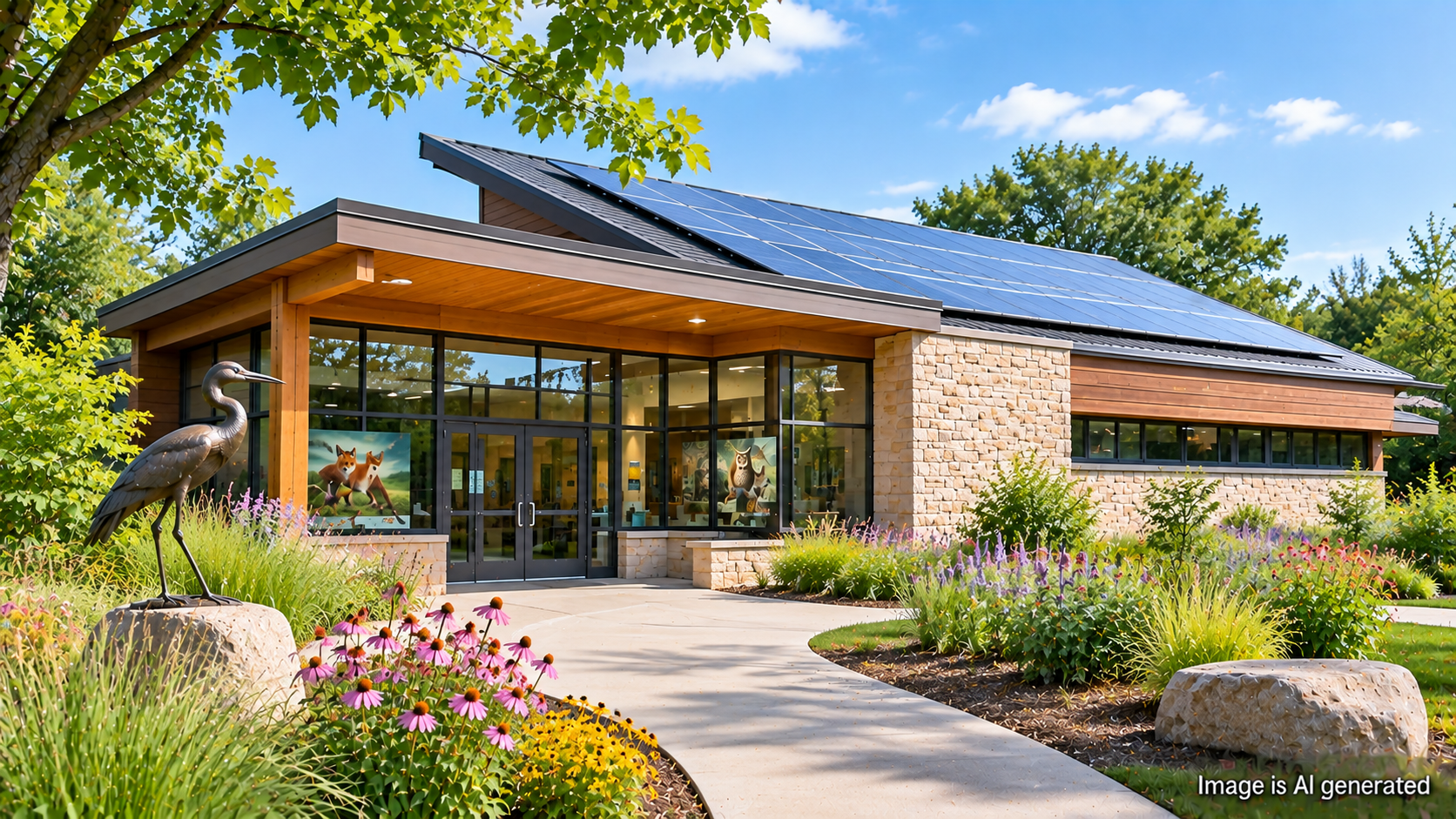
At the DuPage Wildlife Conservation Center, that goal is supported by an extensive solar energy system.
Solar panels installed on the roof and surrounding grounds generate electricity for the facility.
The building is also entirely electric, reducing its dependence on conventional fossil-fuel-powered equipment.
According to the Forest Preserve District, the center began tracking its energy performance on April 1, 2026.
During its initial monitoring period, the facility produced approximately 300,000 kilowatt-hours more electricity than it consumed.
That's an encouraging early result.
However, the Forest Preserve District will continue monitoring the building's performance to determine whether it consistently achieves its annual net-zero energy goal.
Geothermal Heating and Cooling Help Reduce Energy Use
The center doesn't rely on solar power alone.
It also uses a ground-source geothermal system for heating and cooling.
Geothermal systems take advantage of the relatively stable temperatures underground to help regulate indoor conditions.
During colder months, the system can transfer heat from the ground into the building.
During warmer months, it helps remove heat from indoor spaces.
This approach can significantly reduce the energy needed to maintain comfortable temperatures.
For a wildlife rehabilitation facility, reliable temperature control is particularly important.
Animals recovering from injuries or illness often require carefully managed indoor environments.
The geothermal system helps support those needs while reducing the building's overall energy consumption.
Designed With Water Conservation in Mind
Energy efficiency is only one part of the center's sustainability strategy.
The building also incorporates water conservation and stormwater management features.
These systems are designed to reduce unnecessary water use and manage rainfall more responsibly.
By controlling how rainwater moves across the property, the facility can help limit runoff and support the surrounding environment.
Water-efficient building systems also help reduce the resources needed for daily operations.
Together, these improvements contributed to the center's LEED Gold certification.
A Healthier Environment for Animals and People
The building's design also prioritizes indoor environmental quality.
Natural daylight, air quality, and thermal comfort were important considerations during planning.
Architects used energy and daylight modeling to identify ways to improve building performance before construction began.
The result is a facility designed to provide comfortable working conditions for wildlife care professionals while supporting the specialized needs of animal patients.
The project team also evaluated the environmental impact of construction materials.
This process helped identify opportunities to reduce the carbon emissions associated with manufacturing and building the facility.
It's another example of how sustainability was considered throughout the project rather than added as an afterthought.
A New Home for Wildlife Rehabilitation
While the building's environmental achievements are impressive, its primary purpose remains wildlife care.
The new DuPage Wildlife Conservation Center replaced a facility that had served the community for more than four decades.
The modern building includes specialized spaces for examining, treating, and rehabilitating native wildlife.
Every year, the center cares for approximately 11,000 animals.
Patients may include injured birds, orphaned mammals, and other native species that need professional assistance.
The center's goal is to help animals recover and, whenever possible, return them safely to their natural habitats.
The updated facility gives staff additional resources and improved spaces to carry out that work.
Visitors Can Watch Wildlife Rehabilitation in Action
One of the most interesting features of the new center is its public viewing area.
Inside the visitor center, six large windows provide a behind-the-scenes look at portions of the wildlife rehabilitation process.
Depending on the activities taking place, visitors may observe staff examining animals, providing medical treatment, performing procedures, or feeding young wildlife.
These viewing opportunities help residents better understand the work involved in caring for injured and orphaned animals.
The center is not a traditional zoo.
Most animals are being prepared for release and are not kept on public display.
This approach helps reduce unnecessary stress and gives wildlife patients a better chance of recovering successfully.
Educational Exhibits Help Families Connect With Nature
The DuPage Wildlife Conservation Center is also designed to be an educational destination.
Visitors can explore exhibits explaining local wildlife, rehabilitation, and ways to coexist with native animals.
The facility includes a classroom for educational programs and activities.
Families can also borrow binoculars and activity backpacks to explore the surrounding natural environment.
Outside, an interpretive trail introduces visitors to local plants, wildlife, and habitats.
The half-mile Coyote Loop features six educational stops where visitors can learn more about the area's ecosystems.
These features make the center a valuable destination for families, students, and anyone interested in nature.
A New Chapter for Willowbrook Forest Preserve
The conservation center is located within Willowbrook Forest Preserve in Glen Ellyn.
The property has a long history of wildlife protection.
In 1956, Audrie Chase donated land to the Forest Preserve District with the intention of preserving it as a sanctuary for birds.
Over time, the site evolved into a wildlife rehabilitation and education center.
The previous facility opened in 1981 and became known as Willowbrook Wildlife Center.
In 2024, the Forest Preserve District adopted the name DuPage Wildlife Conservation Center to better reflect its expanded conservation mission.
The new building opened to the public on January 12, 2026.
A formal ribbon-cutting celebration followed on April 30.
The LEED Gold certification represents another milestone in the property's transformation.
Why This Achievement Matters for Glen Ellyn and DuPage County
The center's recognition is about more than an impressive building.
It demonstrates how public facilities can support important community services while reducing their environmental impact.
For DuPage County, the project combines three important priorities: wildlife conservation, public education, and sustainable development.
The building provides improved medical care for native animals while giving residents opportunities to learn about local ecosystems.
Its solar and geothermal systems also offer a practical example of how renewable energy can be incorporated into public infrastructure.
For Glen Ellyn and surrounding western suburbs, the center adds another educational and recreational destination to the region.
Families can visit, learn about wildlife, and explore the surrounding preserve without traveling far from home.
And as the building's energy performance continues to be monitored, the project may provide useful lessons for future sustainable developments throughout the area.
Planning Your Visit to the DuPage Wildlife Conservation Center
Interested in checking out the center?
Here are a few helpful details.
Location: 525 S. Park Boulevard, Glen Ellyn, Illinois
Facility size: Approximately 27,000 square feet
Opened to visitors: January 12, 2026
Certification: LEED v4 Gold
Suggested admission donation: $5 per person ages 3 and older
Visitor center hours:
Wednesday: 9 a.m. to noon
Thursday through Tuesday: 9 a.m. to 4 p.m.
The center is closed on certain holidays, including Thanksgiving, the day after Thanksgiving, Christmas Eve, Christmas Day, and New Year's Day.
Visitors can explore educational exhibits, view portions of the rehabilitation process, and enjoy nearby outdoor trails.
For wildlife emergencies, residents should call the center at 630-942-6200 before bringing in an animal.
FAQs
Where is the DuPage Wildlife Conservation Center located?
The center is located at 525 S. Park Boulevard in Glen Ellyn, Illinois, within Willowbrook Forest Preserve.
What does LEED Gold certification mean?
LEED Gold is a recognized green-building certification awarded to projects that meet high standards for sustainability, energy efficiency, water conservation, and environmental performance.
Is the DuPage Wildlife Conservation Center a net-zero energy building?
The facility was designed to achieve net-zero energy use through solar power, geothermal heating and cooling, and other energy-saving systems. The Forest Preserve District is monitoring its performance to verify the annual results.
Can visitors see animals being treated?
Yes. Six large viewing windows allow visitors to observe selected rehabilitation activities. However, most wildlife patients are not displayed because the center focuses on recovery and release.
Is the DuPage Wildlife Conservation Center open to the public?
Yes. The center opened in January 2026 and welcomes visitors during its scheduled operating hours. A suggested admission donation applies.
Final Thoughts
The DuPage Wildlife Conservation Center's LEED Gold certification is an exciting achievement for Glen Ellyn and the entire DuPage County community.
With its innovative solar energy system, geothermal heating and cooling, water conservation features, and modern wildlife rehabilitation spaces, the center demonstrates how sustainability and conservation can go hand in hand.
It's also a wonderful place for families to learn about native wildlife and the important work happening behind the scenes to protect it.
Whether you're interested in green building technology, wildlife conservation, or simply looking for an educational outing in the western suburbs, the DuPage Wildlife Conservation Center is worth exploring!
Check out this article next