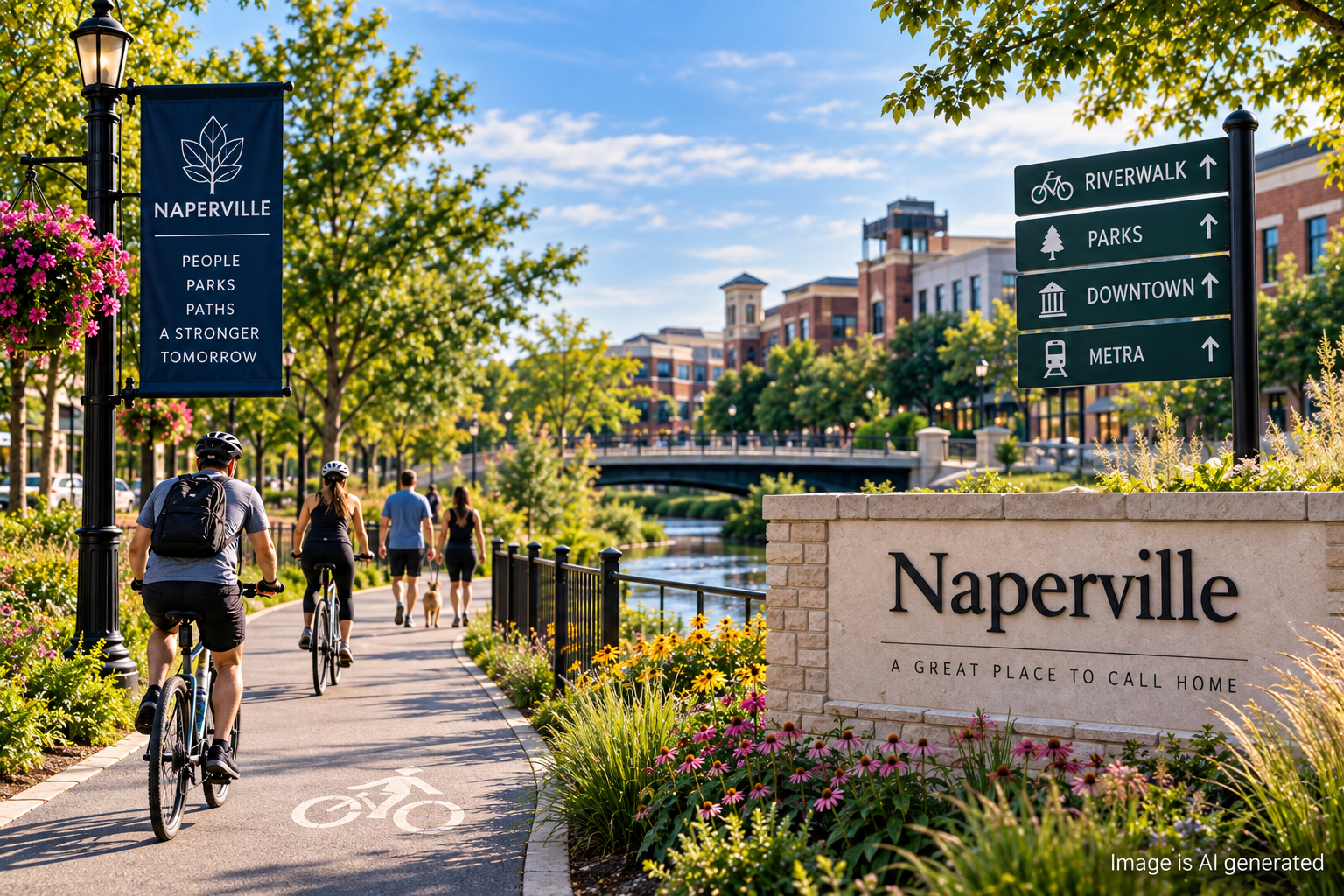
Naperville could look very different for people getting around on two wheels — or two feet.
The city has unveiled a sweeping update to its Bicycle and Pedestrian Plan that identifies more than $54 million in potential improvements across Naperville.
The preliminary plan includes 112 new infrastructure projects, 10 intersection improvements, 12 upgrades to existing facilities, five policy recommendations and four program recommendations.
The goal? Close gaps in Naperville's existing network and make it easier and safer for residents to walk or bike between neighborhoods, parks, schools, businesses and other destinations.
But this isn't a $54 million construction project that's about to begin.
It's a long-term roadmap that could guide bicycle and pedestrian investments in Naperville for approximately the next 20 years.
Why Naperville Is Updating the Plan
Naperville's existing Bicycle and Pedestrian Plan dates all the way back to 1997, with an interim update completed in 2006.
A lot has changed since then.
Naperville has grown considerably, travel patterns have evolved and standards for designing bicycle and pedestrian infrastructure have changed.
The city's existing bicycle network now includes more than 80 miles of bicycle routes and trails, but officials say gaps and barriers remain throughout the system.
That's why Naperville hired engineering firm A. Epstein and Sons International in 2025 to take a fresh look at the entire network.
The team evaluated existing conditions, studied how stressful different roads and intersections can be for cyclists and pedestrians, and collected feedback from residents before developing its recommendations.
112 Projects Could Reshape the Network
The scale of the proposed plan is what really stands out.
Recommendations currently include:
112 new infrastructure projects
10 intersection improvements
12 improvements to existing facilities
5 policy recommendations
4 program recommendations
Rather than concentrating improvements in one neighborhood, the plan looks at connectivity across Naperville.
That could mean everything from new bike lanes and sidepaths to sidewalk connections, intersection markings and other improvements designed to make walking and biking more comfortable.
The ultimate goal is to create a network where individual trails, sidewalks and bike routes actually connect to one another.
Gartner Road Could Get a New Bike Lane
One area specifically identified in the proposal is Gartner Road.
A bike lane is being considered there to provide a more comfortable connection toward Springbrook Prairie Forest Preserve and the DuPage River Trail.
That could improve access to two major recreational destinations while creating another east-west connection for cyclists.
Additional sidepaths have also been proposed along roads including 95th Street and Modaff Road.
Some of those projects could be more complicated because they would require coordination with other government agencies and jurisdictions.
Busy Intersections Are Also Getting Attention
The plan isn't just about adding trails.
Several intersections where bicycles and vehicles currently compete for space have also been identified for possible improvements.
One example is Eagle Street and Aurora Avenue, where existing bike lanes interact with vehicle turn lanes.
Another is Hillside Road and Washington Street.
Potential improvements include directing cyclists through designated crossing areas and adding highly visible pavement markings that alert drivers to bicycle traffic.
The idea is to make movements through complicated intersections more predictable for everyone using them.
Connecting Naperville's North and South Sides
One of the larger challenges isn't necessarily a lack of sidewalks or trails.
It's the barriers between them.
Major roads, railroad tracks and waterways can make it difficult to move comfortably between different parts of Naperville without getting into a car.
The proposed plan puts particular emphasis on improving connections between the north and south sides of the city.
It also recommends looking for lower-speed, lower-traffic streets that could provide more comfortable alternatives to major roads.
For pedestrians, the plan considers filling sidewalk gaps and improving crossings along busy corridors.
Residents Helped Shape the Plan
Naperville didn't develop the recommendations entirely behind closed doors.
More than 500 people participated through an interactive online map between October and December 2025, identifying missing connections, safety concerns and places where improvements were needed.
The city also gathered feedback through pop-up events, stakeholder meetings and a public open house.
When residents were asked which destinations they most wanted better walking and biking access to, trails and parks ranked first at 42%.
Schools and services followed at 24%, commercial areas at 18% and transit at 16%.
That feedback helped shape the projects included in the preliminary plan.
Walking and Biking Have Already Become Easier
Interestingly, Naperville residents were already reporting improvements before this new plan was developed.
City community surveys showed satisfaction with the ease of traveling by bicycle increased from 51% in 2016 to 63% in 2023.
Satisfaction with walking increased even more — from 68% to 81% over the same period.
The new plan is intended to continue that progress while addressing parts of the city where connections remain incomplete.
So, Is Naperville Spending $54 Million Right Now?
No.
That's an important distinction.
The approximately $54 million figure represents the estimated cost of the long-term recommendations, not a single construction project that has already been funded.
Individual improvements would still need additional engineering and design work.
Projects could then be considered for inclusion in Naperville's Capital Improvement Program and implemented incrementally over approximately the next two decades.
That also means residents shouldn't expect 112 construction projects to suddenly appear around Naperville next year.
Some projects could take years to design, fund and complete.
What Happens Next?
The preliminary plan was presented to Naperville's Transportation Advisory Board on September 3.
City staff are now refining the proposal based on feedback.
The current city timeline calls for the plan to return to the Transportation Advisory Board before eventually heading to the Naperville City Council for final consideration.
That process is expected to take place this fall.
And even after the overall plan is approved, individual construction projects would still undergo more detailed engineering, design and public review.
What Could This Mean for Naperville Residents?
If the recommendations eventually become reality, the biggest change may not be any single bike lane or sidewalk.
It could be connectivity.
Naperville already has an extensive network of trails, sidewalks and bicycle routes.
The proposed plan focuses heavily on filling the missing pieces between them.
That could make it easier for residents to:
Bike to parks and forest preserves
Walk or cycle to schools
Reach shopping and dining areas
Connect with existing regional trails
Access transit without driving
Travel between neighborhoods using lower-stress routes
For a city of Naperville's size, those smaller connections could eventually add up to a very different transportation network.
FAQs
How much would Naperville's bike and pedestrian plan cost?
The preliminary recommendations are estimated to cost more than $54 million in total. That figure represents long-term projects that could be implemented over approximately the next 20 years, rather than one immediately funded construction project.
How many projects are being proposed?
The preliminary plan identifies 112 new infrastructure projects, 10 intersection improvements and 12 upgrades to existing facilities, along with policy and program recommendations.
Will Naperville add new bike lanes?
Yes. The preliminary recommendations include bike lanes, sidepaths and other bicycle infrastructure. Gartner Road is among the locations being considered for a new bike lane.
Are the projects already approved?
No. The Bicycle and Pedestrian Plan is still being finalized. The preliminary draft was presented to the Transportation Advisory Board on September 3 and is expected to go through additional review before final City Council consideration.
When would construction begin?
There isn't one construction date because this is a long-term citywide plan. Individual projects would be evaluated, designed, funded and incorporated into Naperville's Capital Improvement Program over time.
Final Thoughts
A $54 million plan with more than 100 potential infrastructure projects sounds like Naperville is preparing for one enormous construction program.
In reality, what's being proposed is something much longer-term.
Naperville is essentially creating a roadmap for how people could move around the city without relying exclusively on a car over the next two decades.
Some improvements could be relatively small.
Others could require major construction and coordination with multiple agencies.
But together, they could eventually create a much more connected system linking Naperville's neighborhoods with its parks, trails, schools, shopping districts, downtown and transit.
For a city that has changed dramatically since its original bicycle and pedestrian plan was adopted in 1997, this could be one of the biggest updates yet to how residents get around.
Check out this article next