The REAL Reason Fox Valley Is Becoming One Of Chicago's Hottest Markets
Fox Valley is getting a lot of attention in the Chicagoland real estate market right now, and for good reason. But calling the entire area “hot” misses a big part of the story.
Some Fox Valley towns are moving incredibly fast, with tight inventory, multiple offers, and prices pushing higher. Other towns only a few miles away are steadier, giving buyers more breathing room and requiring sellers to be more strategic. The difference comes down to housing supply, price points, downtown investment, transportation, and what each town actually offers.
If you are thinking about buying, selling, or relocating to the western Chicago suburbs, the most important thing to understand is this: Fox Valley is one regional label, but it is not one real estate market.
What Counts as Fox Valley?
Fox Valley generally refers to the communities along the Fox River west of the DuPage County suburbs. The core markets include:
- St. Charles
- Geneva
- Batavia
- Aurora
- Oswego
- Yorkville
St. Charles, Geneva, and Batavia are known as the Tri-Cities. These older river towns developed around the Fox River, and their downtowns remain a major part of their appeal today. They have established neighborhoods, riverfront character, local restaurants, shops, parks, and limited room for major new residential development.
Aurora sits at the southern end of Fox Valley and offers a much larger, more varied housing market. Oswego and Yorkville, farther west in Kendall County, have more open land, more opportunities for new construction, and typically more square footage for the price.
That contrast between built-out river towns and growing western communities is the foundation of the current split in the market.
The Big Numbers Do Not Tell the Full Story
It is easy to focus on a regional median sales price, but that number can be misleading in the western Chicago suburbs.
Across Kane and Kendall counties, the median sales price was in the low $400,000s in May, roughly 5% higher than the prior year. Closed sales were also up around 8%, and homes were averaging a little over a month on the market. By June, closed sales across the two counties had increased more than 20% year over year.
Those are strong overall numbers. Still, countywide data blends together towns that are behaving very differently.
For single-family homes in Kane County, the median price was also in the low $400,000s, with prices up roughly 7% and a median timeline of about 50 days from contract to closing. That is useful information, but it does not explain why one home in Geneva may receive several aggressive offers while a similar-priced home in Oswego gets a much more measured response.
The market only becomes clear once you break it down town by town.
Why the Tri-Cities Are Pulling Ahead
Geneva, St. Charles, and Batavia are driving much of the Fox Valley heat, although each town has its own version of it.
Geneva
Geneva has been one of the most competitive markets in the group. Values have risen sharply, inventory has dropped significantly, and homes have often gone under contract in about a month near full asking price. The combination of limited supply, established neighborhoods, a walkable downtown, riverfront access, and a direct train option makes Geneva stand out.
The affordability gap between Geneva and suburbs closer to Chicago has also narrowed. Geneva is still often less expensive than many popular DuPage County communities, but buyers should not assume it is the bargain it once was.
St. Charles
St. Charles is running hot as well, with prices up around 8% and multiple offers showing up regularly for well-positioned homes. Strong demand is especially concentrated in move-in-ready properties in desirable locations.
One spring listing in St. Charles received nine offers, all above asking price, and set a new high sale for that neighborhood. That kind of outcome is not automatic for every listing, but it shows how competitive the right home can be in the right pocket of town.
St. Charles attracts buyers with its downtown, riverfront setting, walkability, schools, and established feel. It does not have its own Metra station, so that transportation factor needs to be weighed carefully by anyone commuting to downtown Chicago.
Batavia
Batavia is smaller and quieter than St. Charles and Geneva, but it still benefits from its river location and Tri-Cities identity. Its price growth can look more volatile because it is a smaller market. A relatively small number of sales can move the percentage significantly from one reporting period to the next.
Still, Batavia has been seeing strong demand, multiple offers, and solid appreciation potential. Buyers who want river-town character but prefer a somewhat quieter setting often find Batavia worth a closer look.
Why Aurora, Oswego, and Yorkville Move Differently
Aurora, Oswego, and Yorkville remain active markets. “Flat” does not mean homes are not selling. In the Chicago suburbs, even a slower market often moves faster than markets in many major metro areas around the country.
But these towns are not seeing the same concentrated pressure as the Tri-Cities.
Aurora’s median price is in the mid-$300,000s, with Oswego and Yorkville generally close behind in the high $300,000s. That is a major draw for buyers who have been priced out of Naperville and other closer-in western suburbs, where homes can reach into the $500,000 to $600,000 range depending on the market segment.
Oswego and Yorkville also offer something the Tri-Cities cannot easily match: more land and more new construction. Buyers can often get larger homes, newer finishes, and more space for their money farther west. The tradeoff is distance from Chicago, a heavier dependence on driving, and in some cases higher property taxes.
Aurora has remained statistically close to flat year over year, even while many listings still receive offers. Oswego has softened slightly, with days on market stretching out compared with the fastest-moving towns.
This is not necessarily bad news for buyers. It simply means there is more room to negotiate and more time to make a thoughtful decision.
Downtown and Riverfront Investment Are Driving Demand
Buyers are not only choosing Fox Valley for home prices. They are also choosing a lifestyle.
St. Charles, Geneva, Batavia, and Aurora have continued investing in their downtown and riverfront areas. Those investments matter because they improve the everyday experience of living in these communities. Walkability, restaurants, trails, local events, river access, and downtown businesses all create demand that cannot be replicated by building another subdivision farther out.
Aurora has seen major redevelopment activity, including the opening of the new $360 million Hollywood Casino Resort after three years of construction. The Fox Valley Mall area has also been undergoing changes and redevelopment.
St. Charles has major redevelopment projects planned near downtown as well, with continued efforts to expand and improve the area. Geneva and Batavia continue to benefit from their established downtown character, which remains a major part of what buyers are paying for.
When supply is limited in these older towns, improvements to the downtown and riverfront can add even more pressure to an already competitive housing market.
The Train Changes the Search
Transportation is one of the clearest dividing lines in Fox Valley.
Aurora has a BNSF Metra station, while Geneva has access to the Union Pacific West line. For buyers who need a direct rail commute into Chicago, those two towns immediately become much more practical.
St. Charles and Batavia do not have their own train stations. Many St. Charles commuters drive to Geneva or West Chicago to catch Metra. Oswego and Yorkville are even more car-dependent, with no local train stop.
If commuting to downtown Chicago is a regular part of your life, this factor can narrow the search quickly. A lower purchase price farther west may not feel like a better deal if it adds a long daily drive or makes the commute less manageable.
For buyers who work remotely, have flexible schedules, or are comfortable driving every day, Oswego and Yorkville can offer substantially more space and newer homes. There is no one correct answer. It comes down to what matters most in your day-to-day life.
Which Fox Valley Town Fits Your Priorities?
Every buyer is balancing price, commute, schools, home size, walkability, and lifestyle. Here is how these markets generally line up.
- Aurora: A strong option for buyers looking for a larger market, accessible price points, expressway access, and a direct train route to Chicago.
- St. Charles: Best suited for buyers drawn to an established downtown, riverfront lifestyle, walkability, and strong demand in a more built-out community.
- Geneva: Appeals to buyers who want downtown character, a direct train option, riverfront access, and a location that is somewhat closer to Chicago than towns farther west.
- Batavia: Offers a quieter, smaller-town feel while keeping the Fox River lifestyle and proximity to the Tri-Cities.
- Oswego: Makes sense for buyers who want more space, newer homes, and a farther-west location that can offer more value for the purchase price.
- Yorkville: A fit for buyers prioritizing new construction, larger lots or homes, and room to grow without needing to be close to the city.
Based on current conditions, St. Charles, Geneva, and Batavia have the strongest appreciation potential within this group. Their limited inventory and established character create a different supply-and-demand dynamic than areas with more land available for development.
|
Not Every Fox Valley Listing Competes the Same Way
One of the biggest mistakes in this market is assuming every listing in Fox Valley will generate the same level of competition.
In Geneva and St. Charles, the average home may sell above list price, and the best move-in-ready homes in the most desirable locations can bring in several offers. If you are making an offer on a standout property that has been prepared well and priced appropriately, going in strong is usually the smarter approach.
That does not mean every seller should aggressively underprice. Underpricing alone does not guarantee multiple offers. Strong demand, good preparation, smart positioning, and an accurate price based on local comps are what create leverage.
Aurora and Oswego work differently. Homes can still receive four or five offers, but the frenzy is lower than it was a couple of years ago. Buyers may have more opportunity to negotiate, ask questions, and avoid making an immediate emotional decision.
For buyers, this means your strategy should change from town to town. For sellers, it means preparation and pricing matter even more in the markets where buyers have more options.
Property Taxes Can Change the Affordability Equation
The purchase price is only part of the monthly cost of owning a home in Fox Valley. Property taxes can take a serious bite out of affordability.
Kane County’s effective property tax rate is around 2.5%, Kendall County is slightly higher, and DuPage County is closer to 2%. On a $450,000 home, that difference can add roughly $1,000 per year in taxes.
Illinois uses a levy-based property tax system. Taxing districts determine the total dollars they need to collect, then that amount is spread across taxable property in the district. Communities with more commercial development have businesses helping share that tax burden.
More residential-focused communities have fewer commercial properties carrying part of the load, which can leave homeowners with higher tax bills. This is one reason a home farther west may look more affordable on the listing price but produce a higher-than-expected monthly payment.
Always calculate the full monthly housing cost before falling in love with a home. That includes principal, interest, taxes, insurance, and any association dues. A lower sale price does not always mean a lower monthly payment.
For Sellers: Never Price Off the Next Town
Fox Valley towns may sit close together on a map, but they should not be priced like they are interchangeable.
Geneva is the clearest example of why this matters. Tight inventory and fast sales can give a well-positioned seller real negotiating power. St. Charles and Batavia are close behind, where accurate pricing can help keep multiple-offer activity flowing.
In Aurora, Oswego, and Yorkville, sellers need to pay closer attention to the actual pace of their own town. Pricing a home based on a recent sale in Geneva or St. Charles rather than on local comps is a mistake. The buyer pool, inventory level, transportation access, housing stock, and competition are not identical.
In the slower-moving towns, staging and first impressions matter even more. Buyers have time to compare homes, revisit options, and notice what has not been updated. A listing that is overpriced or poorly presented can sit while better-positioned homes move.
The right approach is simple: price to your town’s trend, not a neighboring town’s headline. Look closely at the most recent comparable closings, competing listings, and the condition of homes currently attracting buyers.
The Bottom Line on the Fox Valley Real Estate Market
Fox Valley is a strong part of the Chicago suburban real estate market, but the opportunity looks different depending on where you land.
Geneva, St. Charles, and Batavia are benefiting from limited inventory, built-out neighborhoods, downtown character, riverfront investment, and strong demand. Aurora remains a more affordable option with major redevelopment and direct train access. Oswego and Yorkville appeal to buyers looking for new construction and more space, especially when a daily Chicago commute is not a major concern.
The best strategy is not to chase the “hottest” town. It is to identify the town that actually fits your budget, commute, lifestyle, tax comfort level, and long-term goals.
Once you know which Fox Valley market fits what you need, the buying or selling strategy becomes much clearer.
FAQ
Which Fox Valley towns are the hottest right now?
Geneva, St. Charles, and Batavia are seeing the strongest demand in the Fox Valley area. These Tri-Cities benefit from limited inventory, established downtowns, riverfront appeal, and a more built-out housing supply.
Is Aurora a good option for Chicago commuters?
Aurora can be a practical option for Chicago commuters because it has access to the BNSF Metra line, along with expressway access and generally lower median home prices than some nearby western suburbs.
Do St. Charles and Batavia have Metra stations?
St. Charles and Batavia do not have their own Metra stations. Many commuters from St. Charles drive to Geneva or West Chicago for rail access. Batavia commuters also generally rely on driving to nearby stations or commuting by car.
Why are property taxes higher in some Fox Valley communities?
Property taxes can be higher in more residential communities because there is less commercial property available to share the local tax burden. Kane and Kendall County effective rates are also higher than DuPage County’s typical rate.
Should sellers use Geneva or St. Charles sales to price a home in Oswego or Yorkville?
No. Even though these towns are nearby, they move at different speeds and attract different buyer pools. Sellers should price based on recent comparable sales and active competition in their own town.
Check out this article next
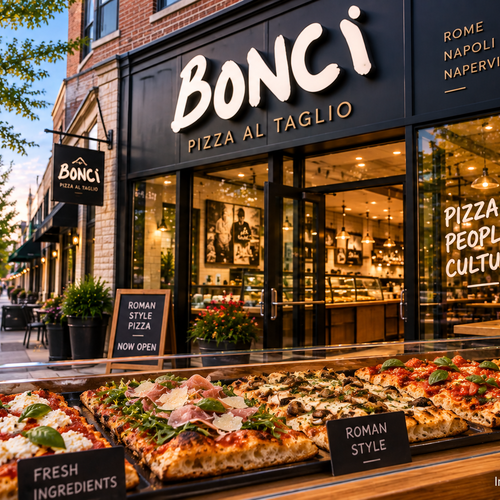
Rome’s Famous Bonci Pizza Just Opened in Downtown Naperville
Bonci Pizza has officially opened at 22 E. Chicago Ave. in Downtown Naperville, marking the celebrated Roman-style pizzeria’s first location in the Chicago suburbs.
Read Article